Interactive outdoor advertising can invite passersby to spin a wheel of fortune, wave a dragon into flight, or even put a pumpkin on their head at Halloween. At its best, it creates a surprising and memorable experience that brings the brand into the everyday life of city dwellers.
In our previous article we explored the possibilities of motion-controlled advertising. Now we look at how an idea becomes a functioning campaign in the streetscape. What should advertisers consider, and how is interactive advertising created at Outshine?
Everything starts with an idea, not technology
As always, the idea is what matters most.
Interactive advertising should not be created solely for the sake of interesting technology. A compelling execution starts with an idea that offers a memorable experience. The experience can be fun, provide new information, or evoke thoughts and feelings. Or all of the above.
Movement and content should work together to support each other and the advertiser's brand. What kind of experience and feeling are you looking for? Is it enough for people to approach the billboard, or do you want a careful wave from them, or can people go all out in front of the ad?
Participation should also give something to the user. An insight, a surprise, or a fun experience can be a reward in itself. Sometimes the experience can culminate in, for example, exclusive content or a discount code.
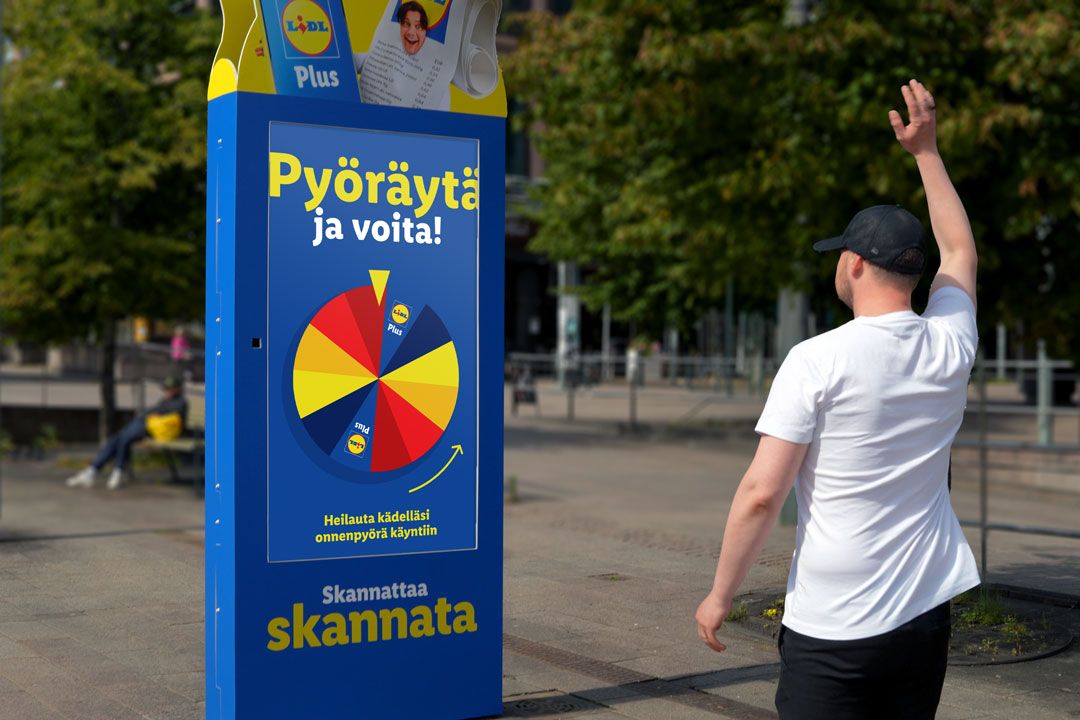
Lidl's wheel of fortune was spun by waving your hand. The winner could scan a discount code to take with them.
Make participation easy and appealing
Interactive advertising is best designed to be easily accessible.
Passersby cannot be expected to engage in lengthy sessions with complex control methods – the ad's functionality must be understood at a glance. It's also a good idea to give viewers instructions verbally or through animation, as most people haven't yet seen such ads in the streetscape. Viewers may not think to expect the ad to respond to their movements.
A good example is Lidl's interactive wheel of fortune. A game familiar to everyone was easy to understand at first glance. A wave of the hand started the wheel, and the ad's text guided people to participate. The movement was both easy for passersby to perform and easy for the motion sensor to recognize.
On All Saints' Day, we brought a Halloween greeting to the darkening evening, where people in front of the billboard could try on a Halloween pumpkin on their head. Use couldn't have been simpler: all you had to do to get the pumpkin was to stand in front of the billboard – alone or with a friend. If the user raised their hand, they could be surprised by a flock of bats swooping out.
It's also important for interactive advertising to look good when no one is playing with it. While it would be great to have users queuing continuously, in reality the ad will also be waiting for the next user. It's important that its content is designed to work during these moments as well.
Another approach is more subtle: the ad doesn't announce its special nature to everyone, but lets the user discover that the ad responds to their movements. For example, an image or landscape visible on the screen can come alive, responding to the passerby's walking pace.
Make sure the experience works in the streetscape
In a typical ad rotation, ads are displayed for a certain period of time before changing to the next one. An interactive experience needs enough time. If the ad changes while participation is underway, the experience is easily left unfinished. That's why interactive ads can be allocated a longer time in the ad rotation than usual, or if necessary, exclusive use of a certain advertising surface.
The experience can be enhanced with eye-catching wraps or casings. They bring the ad's visual world beyond the screen and can entice passersby to participate.
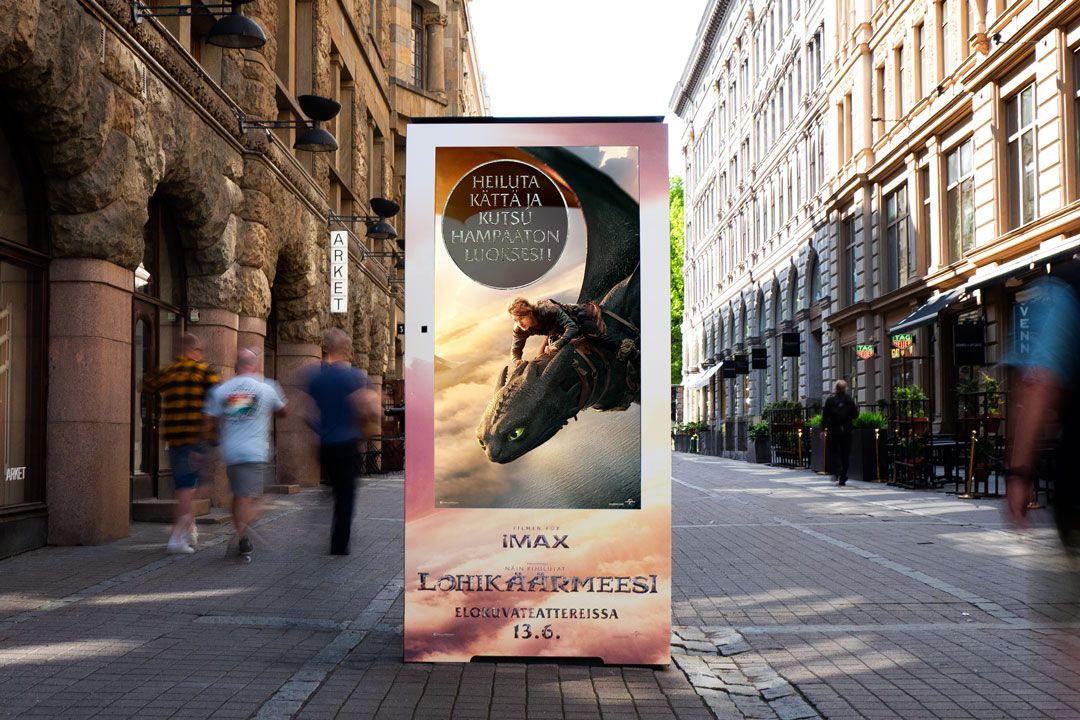
The casing creates an impressive frame for the interactive execution.
How your idea is implemented at Outshine
Do you have an idea for interactive advertising? It doesn't need to be fully thought through yet. We're happy to help refine your thoughts into a working execution.
At Outshine, interactive advertising is built in stages. First, we plan the ad's functionality and visual identity based on the idea. The design can be done in collaboration with the client's advertising agency, in-house team, or we can make a proposal directly using Outshine's resources.
After planning, the execution is developed and tested on our development display as well as on actual advertising devices in the streetscape.
During testing, we refine aspects such as motion control, usability, and the overall visual design. We review the execution together with the client and ensure the final result meets the objectives.
When everything works as planned, the ad is ready to meet its audience on the city streets.
Would your brand be next to invite passersby to join in? Get in touch, and let's brainstorm together!

Interactive Media Developer Ilkka Helo develops interactive digital outdoor advertising solutions at Outshine. He has studied immersive media in Helsinki and Utrecht, and explores the possibilities of interactive media in his free time as a VJ and media artist.