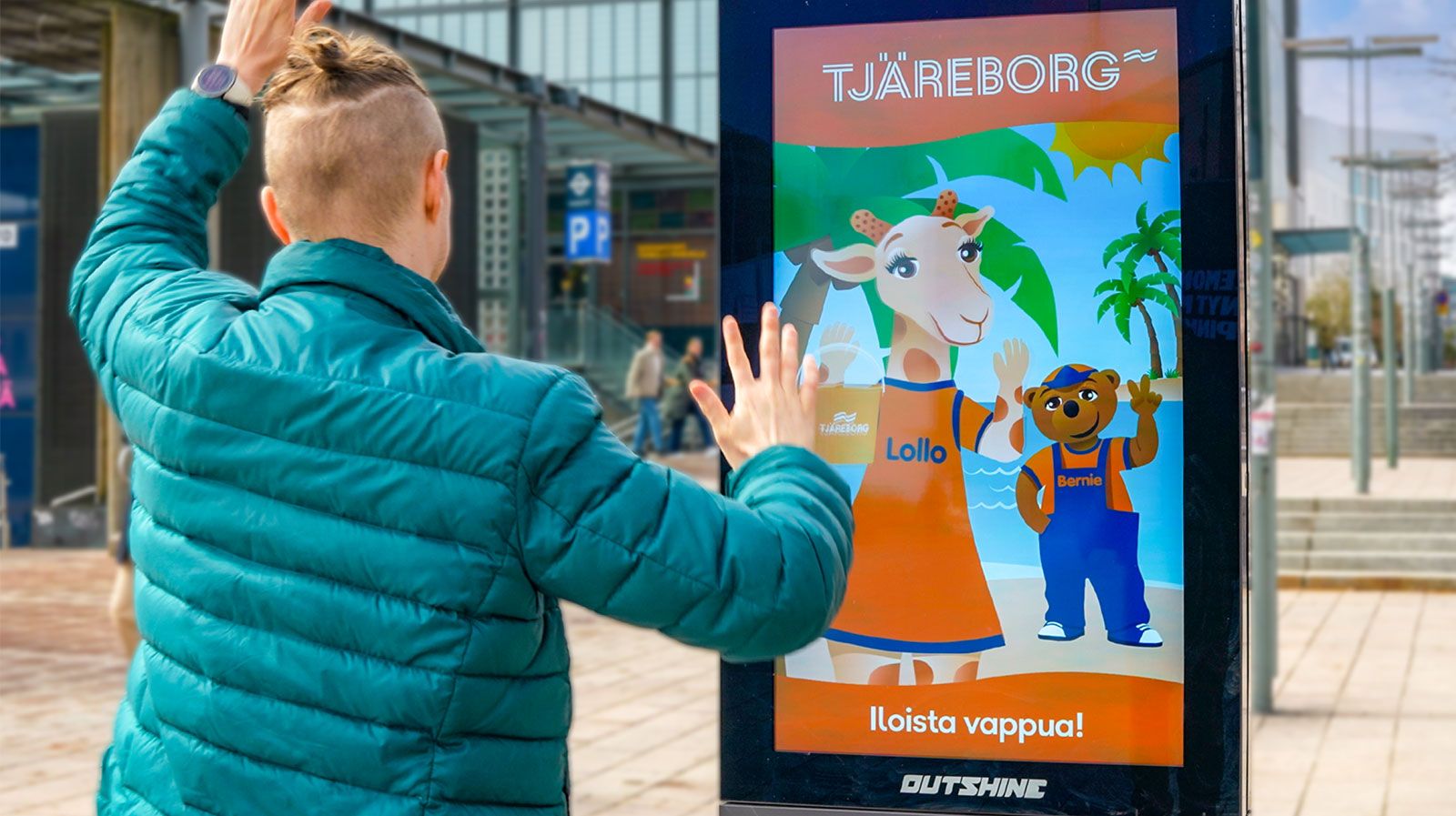
What if you could jump into an ad? What if when you encounter an ad on the street, you could be not just a viewer, but also an active participant if you choose? This is exactly what motion control makes possible
Outshine has brought various motion-controlled ads to the streetscape. In one, the user saw their mirror image on the screen, in another a mascot repeated the user's movements, and in a third, a hand wave activated a prize wheel - and this is just a few examples.
Minority Report left an indelible mark on sci-fi imagery with its hand gesture-controlled user interface.
In media, motion-controlled user interfaces have long been a way to depict advanced technology. Although motion-activated doors and lights are already very commonplace technology, media content that responds to user movement has been seen mainly in media art and games.
Arcade halls, art galleries, and science centers have had motion-controlled experiences for decades. The technology truly became familiar to people when Nintendo released the Wii console in the early 2000s with its motion-controlled games. Until then, video games had been played mainly with controllers or mouse and keyboard, but now the whole body was the gaming instrument. Gaming was social and physically active, games were light and suitable for casual play.
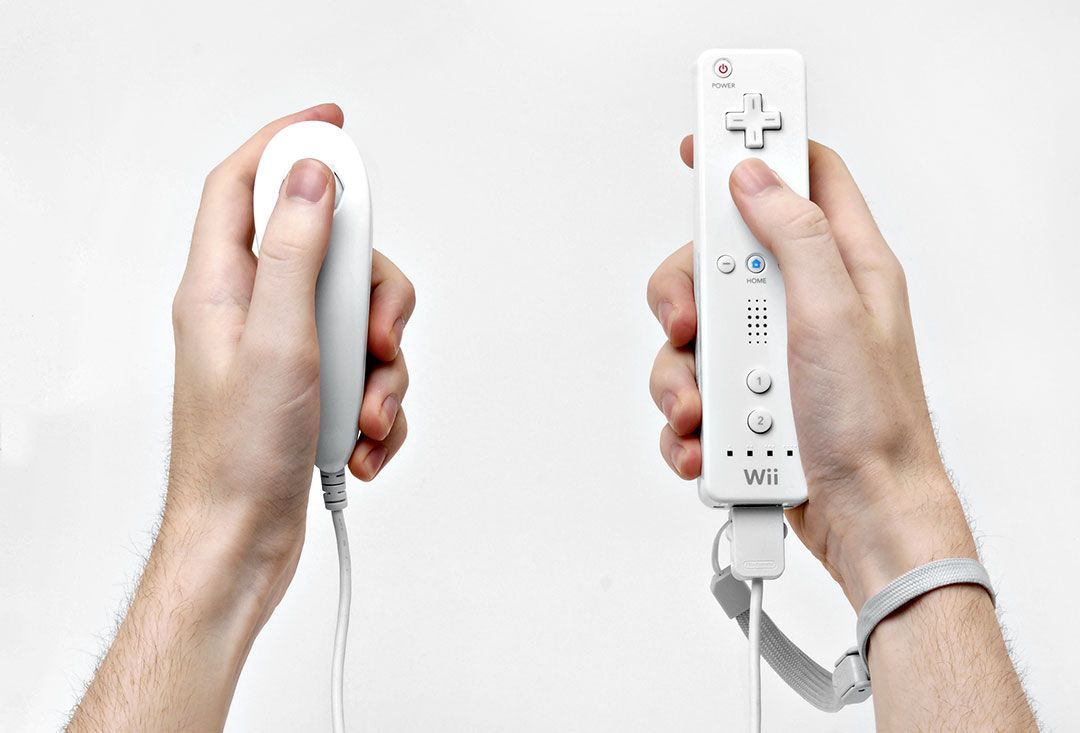
Nintendo Wii controllers recognize the player's movements.
The console rose to great popularity and sold over a hundred million units. Its great popularity was not due solely to the novel, motion-sensing controllers, but game design also played an important role: party games that were quickly learned didn't require prior knowledge, you could jump right into the action.
The same applies to interactive media works and motion-controlled ads: the idea must be grasped quickly and the interaction methods must be immediately understandable. Especially on the street at an ad, no one will start learning controls - the method of action must be immediately clear and something interesting must happen right away.
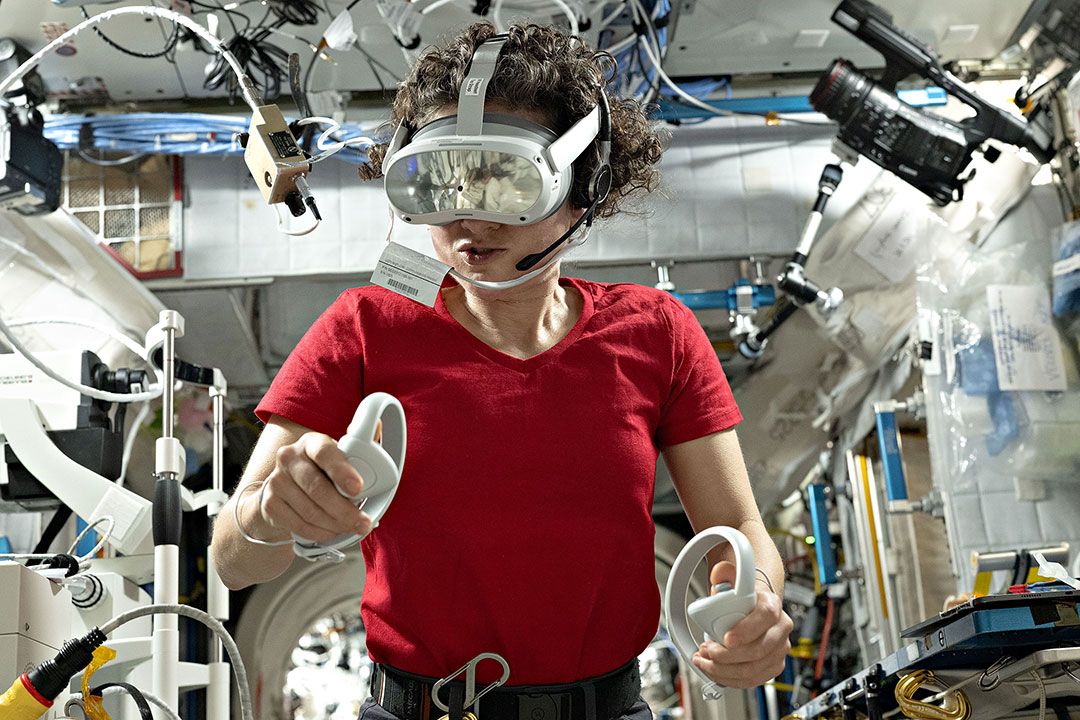
In virtual reality applications, the user's game character precisely mimics the movements detected by the VR glasses and controllers.
The biggest trend in motion-controlled gaming has passed, but it changed the landscape of interactive media: Microsoft's Kinect sensor, developed for gaming, is used in both science and art. Current game controllers also recognize motion, and Nintendo continues to release its popular dance game series. In virtual reality games, the game character closely follows the player's actual movements, making gaming embodied and immersion on a completely different level. The relationship with the game character is more immediate when it follows the player's body movements instead of button presses.
Motion tracking brings an embodied and multisensory dimension to digital media, making the experience captivating and easily accessible. When a game or artwork follows movement without separate controllers, the experience is at its best magical. The same is possible in outdoor advertising, where motion control can surprise and engage in interaction.
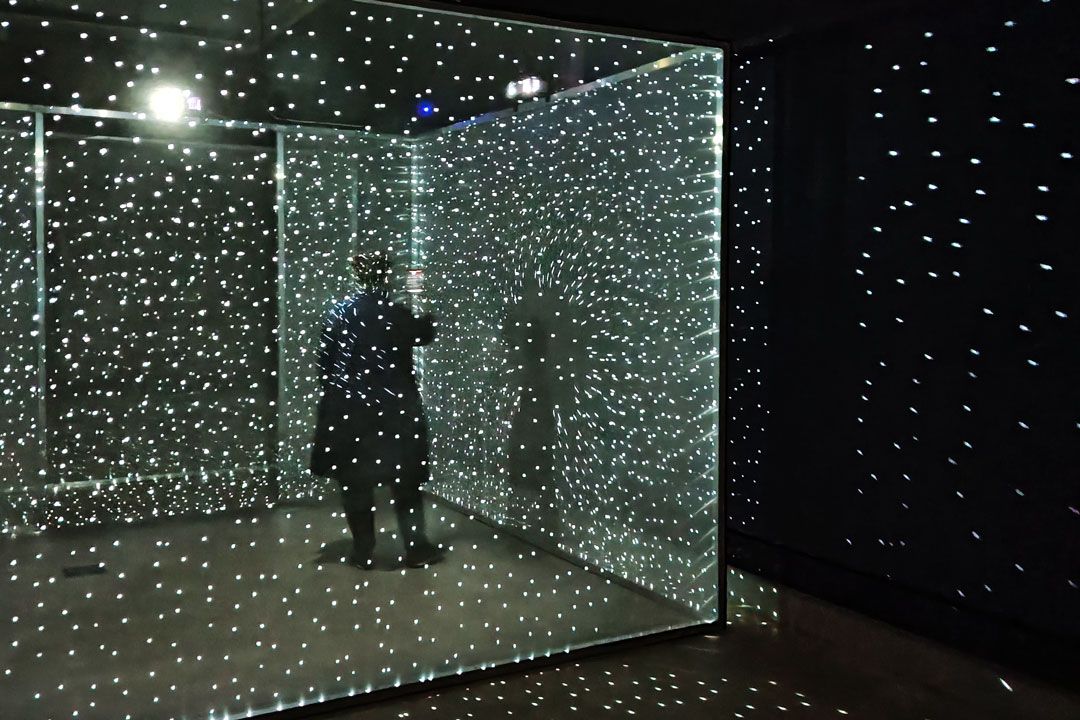
Media art and interactive installations have made motion-responsive media familiar. XYZT Abstract Landscapes by Adrien M and Claire B at the Malva Museum.
But what does motion control enable in advertising? What kind of interaction between movement and media is intuitive and engaging? What kind of movement supports the ad's message and creates a cohesive whole with the brand? These are the questions being explored at Outshine.
For example, a prototype is currently being developed that is based on revealing content with a wiping hand gesture. A wiping motion might conjure up household cleaning products, but it can equally be used to scratch out a new product or a promotional code. It's always interesting to see what emerges from hiding!
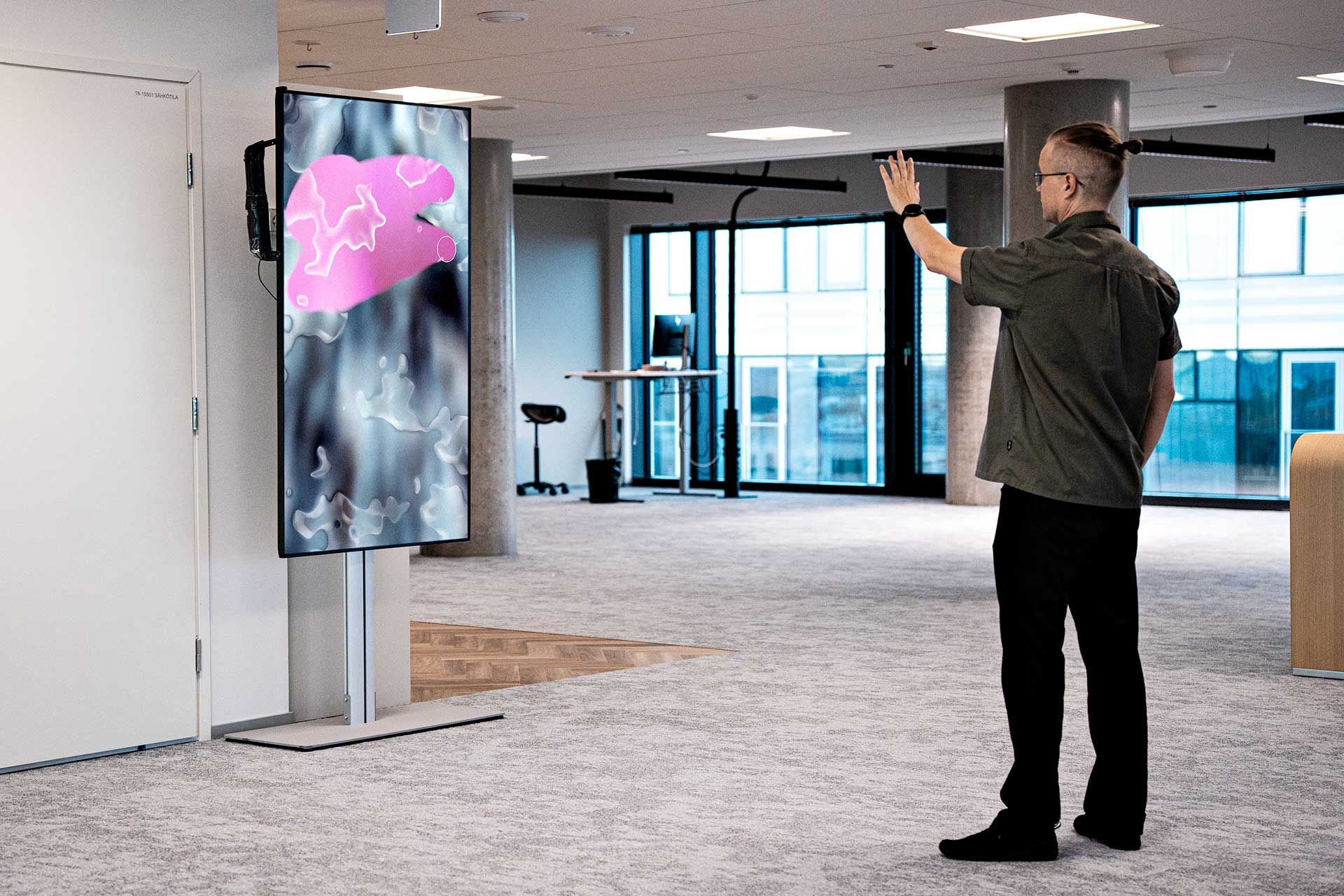
Motion-controlled prototypes are being developed at Outshine's office.
Encouraging a short exercise break could suit a gym, which after a few stretches and squats invites you to continue training in better facilities - perhaps accompanied by a promotional campaign. Or exercise breaks could just as well be used in winter months for a little warm-up, making the moment at the ad feel like warmth in the body.
A new approach offers memorability and visibility. Among all passively watched media, a motion-controlled ad is a novel experience for street passersby, one that is also a joy to share forward.
A motion-controlled ad offers an advertiser a way to grab attention with new technology that hasn't yet been seen much in the streetscape. The experience expands from being perceived only by the eyes to multisensory. It captures the viewer in immediate interaction, where the user's movement guides the screen content and the screen content in turn guides the user.
The moment at the ad is personal when the screen's visuals are under the viewer's control. Movement remains felt in the body and the novel experience stays in the mind.

Interactive Media Developer Ilkka Helo develops interactive digital outdoor advertising solutions at Outshine. He has studied immersive media in Helsinki and Utrecht, and explores the possibilities of interactive media in his free time as a VJ and media artist.