
Political advertising guidelines
The EU regulation on political advertising has been in force since 10 October 2025, and it applies to out-of-home advertising as well. In practice, we need a few more details from you than before — and slightly earlier.
This page sets out exactly what and when.
What is a political ad?
An advertisement is political if either of the following applies:
- its sponsor is a political actor — a political party, candidate, elected official, or campaign organization — or someone acting on their behalf
- the message seeks to influence the outcome of an election or referendum, voting behavior, or a legislative or regulatory process
Political advertising includes, for example:
- an election advertisement for a party or candidate
- a campaign related to a referendum
- a trade union campaign promoting a legislative change
- a corporate campaign taking a stance on upcoming regulation
Political advertising does not include:
- advertising for a product or service without a political objective — even when proceeds are directed to charity
- general fundraising without a social or political statement
- neutral public authority information about elections, such as voting instructions
- general presentation of a city or municipality
- an opinion expressed by an individual on their own initiative, for which no payment is made

A statement can be a political ad even if no party is mentioned
The regulation is not limited to political parties and candidates. If a campaign seeks to influence political decision-making, it is political advertising — even if no party logo appears in the ad.
Such topics may include:
- climate action and environmental regulation
- taxation and economic policy
- immigration
- social and healthcare reforms
- equality and human rights
- other legislative proposals under preparation
The same topic can be treated in either way. A humanitarian campaign collecting food and medicine is standard advertising. The same campaign becomes political advertising if it takes a stance on war or government actions.
Unsure? Ask us during the planning phase — we are happy to help.

How a political campaign progresses
- Inform us right at the booking stage that the campaign is a political or social ad.
- We will send you a transparency notice form.
- We publish the transparency notice and send you a link and QR code, which must be attached to the ad.
- You submit the final material to us via our One platform.
- We verify that the required markings are included in the ad and that the link works.
- The campaign goes live as scheduled.

Schedule
A political campaign requires more time than usual because the transparency notice must be filled out and published before you can finalize the creative — as the link and QR code come from us.
- Transparency notice: as soon as possible after campaign confirmation, but no later than 10 working days before the start of the campaign.
- Final, marked material: 8 working days before the start of the campaign.

What must be included in the ad
Five things, all within the same ad:
- The text POLITICAL AD clearly visible.
- The name of the sponsor — the official name of the company or entity, or the first and last name of a natural person.
- The name of the controlling entity, if the sponsor is under the control of another party. Controlling power refers to decisive influence over, for example, the composition of governing bodies, voting, or decision-making.
- The topic related to the ad — for example Parliamentary Elections, referendum, or a named legislative project.
- Link and QR code to the transparency notice. You will receive both from us.
The markings do not need to be in all caps, but they must stand out from the background and be legible from the distance at which the ad is viewed.
THE AD CANNOT BE PUBLISHED if the required information has not been provided.
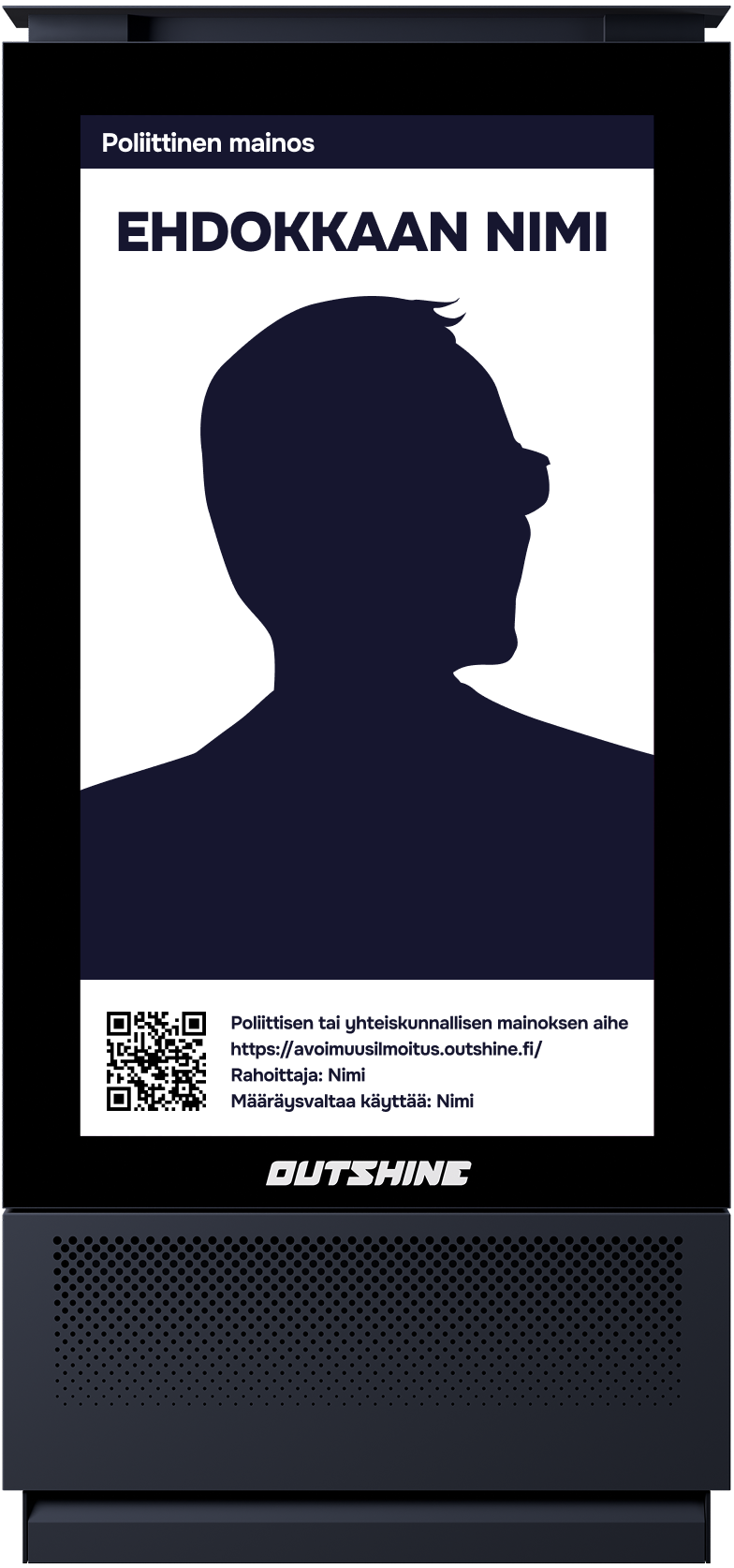
Example of required marking
Political advertising cannot be bought programmatically
Political and social campaigns are always agreed directly with us. In programmatic buying, we cannot see the sponsor nor do we have time to verify the markings before publication, so political advertising is excluded from programmatic buying.